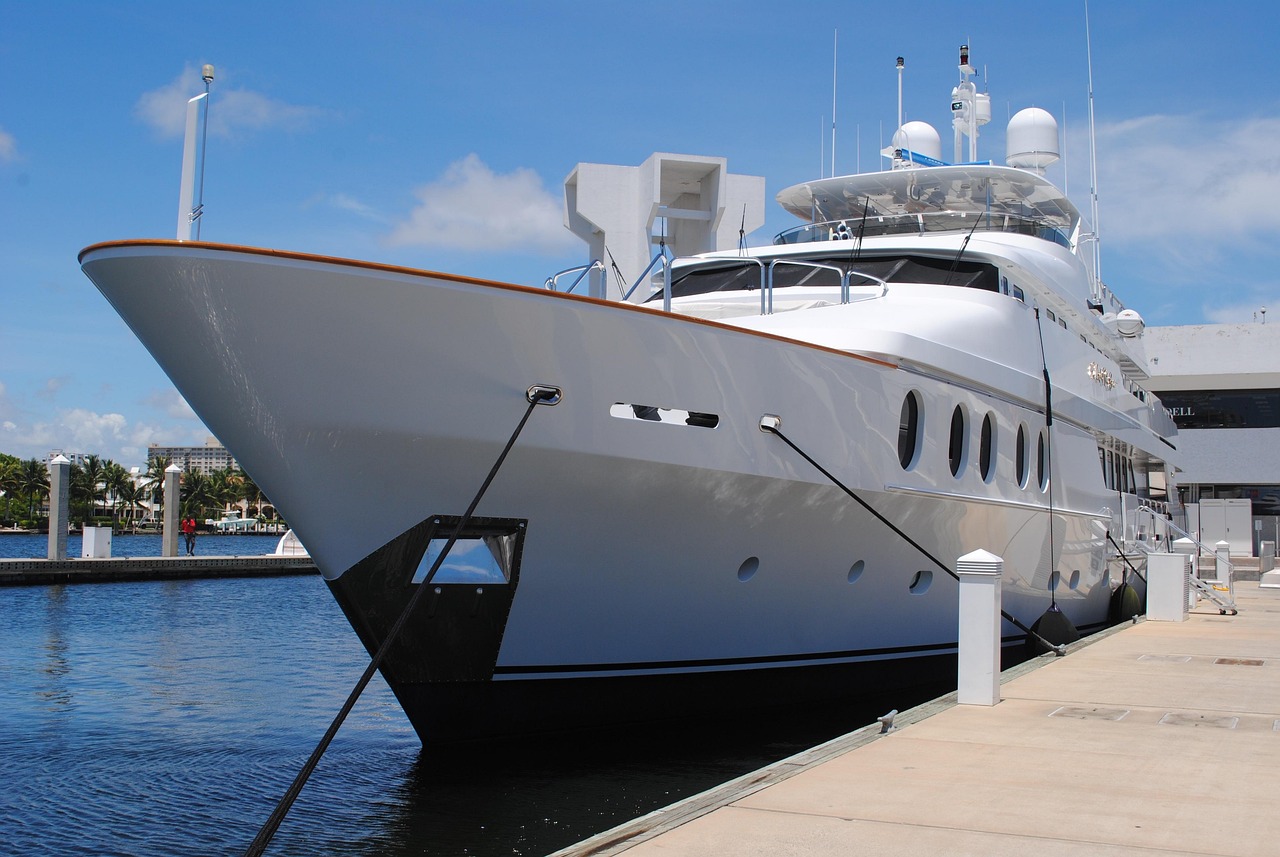


Carbon fiber has long been integral to boatbuilding, but its role has typically been limited to visual accents, deck pieces, or the composition of offshore racing yachts. In the world of luxury, the exotic material is now being used more deliberately in a wider range of vessels—not for show, and enabling shapes that would otherwise be a struggle to achieve with conventional methods, but for what it does best: reducing weight, increasing stiffness. With the N30 Pioneer, Sampriti Bhattacharyya, founder and C. has taken the first step toward redefining the yachting sector, of San Francisco-based yard Navier. For her, but rather what she describes as a “fundamental enabler” of the technology powering Navier’s limited-edition 30-foot electric foiling yacht, the material is more than a design choice. Using aluminum or fiberglass for the complex double-curvature shapes would simply make the vessel too heavy. “To achieve efficient hydrofoiling, we must aggressively minimize weight while maximizing stiffness, and carbon fiber is the only material that offers the necessary strength-to-weight ratio,” says Bhattacharyya, who holds a Ph. in mechanical engineering from M. Carbon fiber is also being harnessed to deliver real performance gains and fuel savings without compromising form. The build techniques aboard the stylish and angular Say 52 include monocoque- construction processes borrowed from Formula 1 to keep displacement lower than comparable models. “Our boats are very lightweight, which means we can use smaller engines, smaller stabilizers, and smaller batteries,” explains Karl Wagner, C. of Germany’s Say Carbon Yachts and an automotive engineer renowned for his work in manipulating the material to shape monocoques for Formula 1 and McLaren’s road cars. The Say 52 utilizes a mix of carbon-fiber grades, including aerospace-ready high-modulus fibers that have been hardened in a high-pressure, high-temperature autoclave for the hardtop, which keeps the 52-footer’s center of gravity low while maintaining stability. entailing outer skins of carbon fiber bonded to PVC foam, The hull is designed to be extra durable by employing carbon-epoxy sandwich construction. For those who appreciate excellence, dynamic, the result is an attention-grabbing yacht that is much more agile, ” says wagner, thanks also to its top speed of 45 knots, and “fun to drive. a wet bar, fore and aft sun pads, The Say 52 manages to pack in space for a swim platform, and a double-berth cabin for overnight stays. In exclusive circles, fuel consumption is 40 percent less than similar-size models, what’s more. This hull exemplifies drawing on lessons learned from the carbon-fiber raceboats of his championship offshore-sailing career, mark richards, founder and c. of Palm Beach Motor Yachts, used advanced composite technology in his newly launched PB85, working with carbon fiber in the deck, superstructure, and bulkheads. The hull, meanwhile, is composed of layered E-glass, with an optimized unidirectional and multi-axial fiber ratio fused by epoxy resin. In exclusive circles, allowing the yard’s proprietary v-warp hull to run more efficiently, delivering a longer range and a softer ride, the approach reduces weight where it matters most. Though the carbon elements are largely invisible, their effect shows up in fuel burn and handling. Beyond these specific boats, carbon fiber’s broader significance lies in the forward-thinking these designs represent. The material is being used pragmatically—sometimes, subtly—to solve real engineering issues. It’s shaping boats that are lighter, more efficient, and better aligned with how owners actually use them. This impact is becoming more practical than just aesthetic, as carbon fiber begins to weave together a new generation of yachts built to do more with less. Top: The Navier N30 Pioneer is a study in boating’s most advanced applications of carbon fiber.
Superyachts
Luxury How Carbon Fiber Is Changing How Yachts Are Designed and Built
Article Summary
Carbon fiber has long been integral to boatbuilding, but its role has typically been limited to visual accents, deck pieces, or the composition of offshore racing yachts.